
10 Red Flags in Your Financial Statements You Can’t Ignore
Your financial statements are trying to tell you a story. The question is whether you know how to read it. Learn the 10 red flags you can’t afford to ignore.

Sales are exciting. Invoices are promising. But payments are what keep the business alive.
Many business owners make the mistake of thinking revenue is created when the invoice is sent. But the truth is simple: A sale does not help your cash flow until the money is actually collected.
That is why accounts receivable matters.
Accounts receivable is the money customers owe your business for products or services already delivered, but not yet paid for. On paper, it may look like income. In your bank account, it is still missing cash.
And missing cash creates pressure.
It can make payroll feel tight. It can delay inventory purchases. It can cause you to rely on credit cards. It can make tax payments harder. It can leave you wondering why your business looks profitable but still feels cash-strapped.
Getting paid faster is not just an administrative task. It is a cash flow strategy.
Accounts receivable, often called AR, is money owed to your business by customers, clients, or other businesses. This usually happens when you provide products or services before payment is received.
Examples include:
For retail and eCommerce businesses, accounts receivable may not be as obvious as it is in service businesses. Many transactions are paid upfront by card or online checkout.
But AR can still show up in places like wholesale orders, custom orders, nonprofit or school purchases, B2B accounts, local partnerships, classroom orders, vendor credits, and invoices for services or consulting work.
If money is owed to you, it needs a clear process.
Accounts receivable affects cash flow directly.
When invoices are not collected quickly, your business is essentially financing the customer. You have already provided the product, service, time, labor, materials, or inventory. But the cash has not arrived yet.
That means your business is carrying the cost while waiting to be paid. This can create problems such as:
A strong accounts receivable process helps prevent those problems. It gives your business a system for billing clearly, collecting quickly, and following up consistently.
Many payment problems begin before the invoice is ever sent. If payment terms are unclear, due dates are vague, customers are not sure how to pay, or expectations were never discussed, delays become more likely.
The best accounts receivable systems start with clear communication upfront. Before you deliver the product or service, make sure the customer understands:
Clarity reduces confusion. And confusion is one of the biggest reasons invoices go unpaid.
Your payment terms should be simple, specific, and easy to understand. Avoid vague language like “due soon” or “pay when possible.”
Use clear terms such as:
For small businesses, shorter payment terms are often better. Net 30 may be common in some industries, but it can create unnecessary cash pressure if your business needs money sooner. The faster you need the cash, the shorter your terms should be.
Deposits protect your cash flow. They are especially important when your business has to purchase inventory, reserve time, customize products, or commit labor before the final payment is received.
Deposits may be helpful for:
A deposit reduces your risk and confirms the customer is serious. It also helps cover the upfront cash your business may need to fulfill the order. For example, if you need to purchase materials before completing a custom order, the deposit helps prevent your business from using operating cash to fund the customer’s project.
The longer you wait to send an invoice, the longer you wait to get paid. Invoices should be sent as soon as the product is delivered, the order is ready, the service milestone is completed, or the billing period ends.
Do not let invoicing become a once-a-month catch-up task if that delays cash. A simple rule is: When the work is done, the invoice goes out.
For larger projects, invoice by milestone instead of waiting until the end. For recurring services, set up automatic invoicing whenever possible. Fast invoicing sends a clear message that payment is part of the process, not an afterthought.
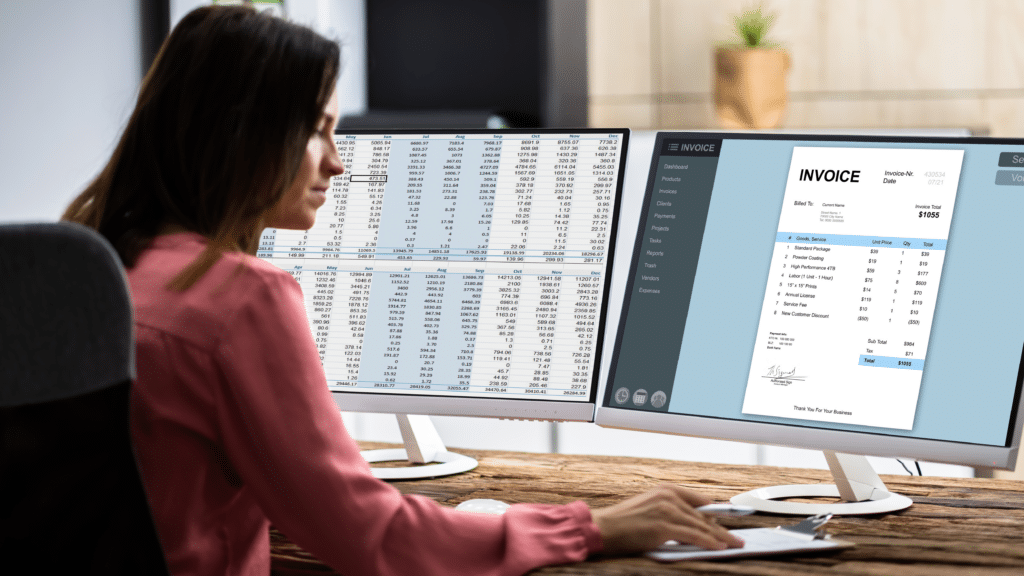
A confusing invoice slows down payment. Your invoice should clearly show:
The customer should not have to guess what the invoice is for or how to pay it. The easier you make payment, the faster you are likely to receive it.
If paying the invoice is difficult, customers will delay. Your invoice should include a clear payment link whenever possible.
Offer payment methods that fit your business, such as:
Be careful not to offer so many options that your process becomes hard to manage. The goal is to make payment easy for the customer and easy for your business to track.
If you prefer ACH because fees are lower, make that option clear. If card payments are accepted but include processing fees where legally allowed, communicate that upfront.
Payment follow-up should not depend on memory. Use your accounting or invoicing software to send automatic reminders.
A simple reminder schedule might look like this:
Automation helps you stay consistent without spending extra time manually chasing every invoice. It also makes the process feel less personal and less awkward. The system is simply following the payment terms.
Do not wait too long to follow up. The older an invoice gets, the harder it can be to collect. A customer who misses a due date should hear from you quickly.
Your first follow-up can be friendly: “Hi, I wanted to check in on invoice #123. It looks like payment was due yesterday. Here is the payment link again for convenience.”
If there is no response, the tone can become more direct. The key is consistency. When customers know you follow up quickly, they are less likely to ignore invoices.
Every business should have a written process for overdue invoices. This does not need to be complicated.
It simply needs to answer:
Having a process protects you from making emotional decisions. It also helps your team handle overdue invoices consistently.
One of the biggest AR mistakes business owners make is continuing to serve customers who already owe money.
If a customer has overdue invoices, pause future work, orders, or deliveries until the account is current. This may feel uncomfortable, but it protects your business.
A customer who is not paying you is using your cash. That cash could be needed for payroll, taxes, inventory, rent, or vendor payments.
You can be professional and firm at the same time. A simple policy might be: “All accounts must be current before new orders are fulfilled.” This sets a clear boundary.
Your accounts receivable aging report shows which invoices are unpaid and how long they have been outstanding.
It usually groups invoices into categories such as:
This report should be reviewed weekly. Do not wait until month-end.
The aging report helps you see which customers need follow-up, which invoices may be at risk, and how much cash is missing from your business. The goal is to keep overdue AR as low as possible.
Days Sales Outstanding, often called DSO, measures how long it takes your business to collect payment after a sale is made. The lower your DSO, the faster you are collecting cash.
For example, if your average customer pays in 10 days, that is much better for cash flow than customers paying in 45 days.
You do not need to overcomplicate this. Start by asking:
Tracking this over time helps you improve your payment process.
Some businesses offer a small discount for early payment. For example: 2% discount if paid within 10 days
This can help speed up cash collection, but it should be used carefully. Discounts reduce profit.
Before offering an early payment discount, ask:
Early payment discounts can be useful, but they should not become a habit that quietly reduces profitability.
Late fees can encourage customers to pay on time, but they must be clearly stated in your payment terms before the invoice becomes overdue.
A late fee policy may include:
Make sure late fees are allowed in your state and industry, and confirm that your terms are written clearly. The goal is not to punish customers. The goal is to communicate that late payment has consequences.
Sometimes invoices go unpaid because they were sent to the wrong person, wrong email, or old billing contact.
Keep customer billing details current. For business customers, confirm:
A missing purchase order number or incorrect billing email can delay payment for weeks. Small details matter.
Getting paid is only part of the process. You also need to apply payments correctly.
If payments are not matched to invoices, your AR report may show invoices as unpaid even when the money was received. This creates confusion for the business and the customer.
Reconcile payments regularly so your reports stay accurate. This includes matching:
Accurate AR reports help you make better cash flow decisions.

Accounts receivable is one of the clearest examples of why profit and cash are not the same. Your income statement may show revenue. Your invoice may show money owed. But until the payment is collected, the cash is not available.
That means you may be profitable on paper while still short on cash.
For retail and eCommerce businesses, this becomes especially important when AR is tied to wholesale orders, school orders, special orders, corporate sales, or vendor partnerships. You may need to purchase inventory or supplies before the customer pays. If you do not collect quickly, your business carries the cash burden.
This is why AR should be part of your cash flow forecast.
Profit First works best when cash is actually collected. Allocations are based on money received, not money you hope to receive.
That distinction matters. If you invoice $10,000 but only collect $4,000, you cannot allocate based on $10,000 of expected income. You allocate based on the cash that actually came in.
Once payment is received, the money can be distributed into the appropriate accounts. For retail and eCommerce businesses, that may include:
This helps you avoid spending money before it arrives. A strong AR process supports Profit First because it turns invoices into cash faster. And once the cash is received, you can give every dollar a job.
Accounts receivable can create special challenges when inventory is involved. If you sell products on invoice, you may have already used cash to buy the inventory. Once the product is delivered, the inventory is gone. But if the customer has not paid, your cash is still missing.
That creates a double strain: Cash went out to buy inventory. Cash has not yet come back in from the customer.
This is why payment terms matter so much for product-based businesses. For large orders, consider requiring:
Inventory should not leave your business without a clear payment plan.
Your accounts receivable process may need improvement if:
These warning signs do not mean your business is failing. They mean your collection process needs stronger structure.
A weekly AR routine can make a big difference. Set aside time each week to:
This routine keeps receivables from becoming invisible. The longer AR sits untouched, the harder it becomes to collect.
Subject: Friendly Reminder: Invoice [Invoice Number] Due Soon
Hi [Customer Name],
I hope you are doing well. This is a friendly reminder that invoice [Invoice Number] for [Amount] is due on [Due Date].
You can pay using the link below: [Payment Link]
Please let us know if you have any questions.
Thank you, [Your Name]
Subject: Past Due Invoice [Invoice Number]
Hi [Customer Name],
I wanted to follow up on invoice [Invoice Number] for [Amount], which was due on [Due Date].
Please submit payment using the link below: [Payment Link]
If payment has already been sent, please reply with the payment details so we can update our records.
Thank you, [Your Name]
Subject: Account on Hold Due to Past-Due Balance
Hi [Customer Name],
Our records show that invoice [Invoice Number] for [Amount] remains unpaid.
At this time, we are placing the account on hold until the past-due balance is paid. Once payment is received, we will be happy to move forward with future orders or services.
You can submit payment here: [Payment Link]
Please contact us if you have any questions.
Thank you, [Your Name]
Getting paid faster is one of the simplest ways to improve cash flow. You do not always need more sales to create more financial stability. Sometimes you need to collect the money you have already earned.
A strong accounts receivable process helps you send invoices faster, communicate clearly, follow up consistently, reduce overdue balances, and protect your business from carrying customer debt.
For retail and eCommerce businesses, this is especially important when wholesale orders, custom orders, school orders, corporate accounts, or special projects are involved.
Every unpaid invoice represents cash your business cannot use yet. Cash that could support inventory. Cash that could cover payroll. Cash that could fund taxes. Cash that could protect profit. Cash that could pay the owner.
Your accounts receivable process is not just paperwork. It is part of your cash flow system. And when you improve it, your business gets stronger.
eComm Financial Services helps retail and eCommerce business owners create better invoicing systems, track unpaid balances, protect inventory cash, and build financial habits that support stronger decisions. Contact us today to get paid faster and manage your money with more confidence.
Your financial statements are trying to tell you a story. The question is whether you know how to read it. Learn the 10 red flags you can’t afford to ignore.
Learn how to set up Profit First bank accounts step by step so your business can protect profit, owner’s pay, taxes, inventory cash, and operating expenses.
Learn the bookkeeping mistakes that may be costing your business thousands in lost profit, tax problems, cash flow stress, inventory errors, and poor financial decisions.